
Stillbirth, Miscarriage & Grief:
Holding Space for the Loss No One Talks About
What Grief Looks Like When No One Acknowledges Your Loss
Someone asks, "So when are you having kids?" and you smile through the pain, unsure how to answer — because you tried. You loved. And you lost.
If that moment feels familiar, this post is for you. Grief after miscarriage or stillbirth is one of the most profound and isolating forms of loss a person can experience — and one of the most misunderstood. Society has a complicated relationship with pregnancy loss: it happens in the silence before a baby has a name, before a shower has been thrown, sometimes before the world even knew you were expecting. And yet the love, the hope, the plans, the identity of becoming a parent — was all so real.
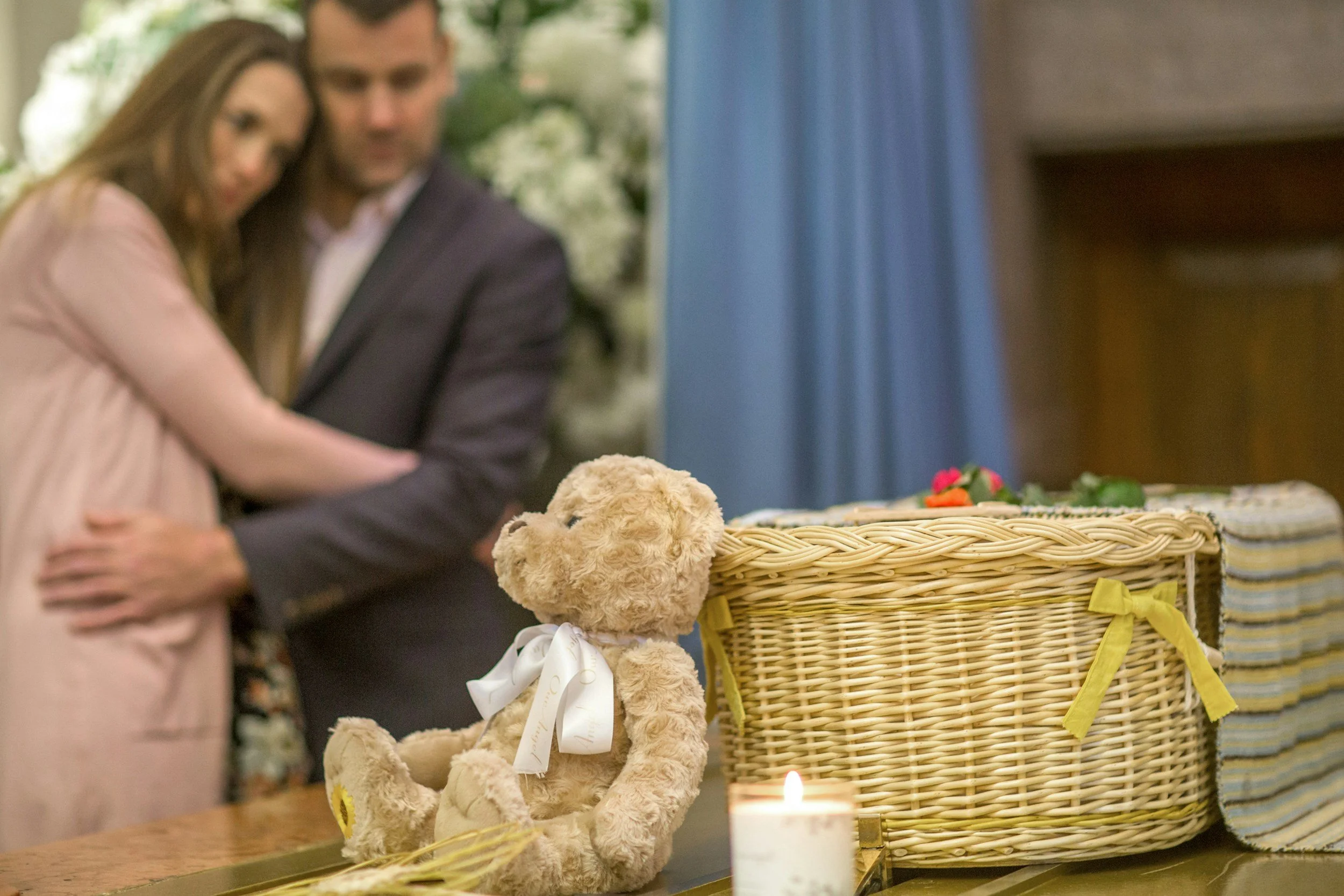
So many people carry this grief quietly, performing "fine" in a world that seems uncomfortable with their pain. Consider a woman we'll call Sarah — a composite drawn from experiences shared in grief work — who lost her pregnancy at nine weeks. She was back at her desk within days. Colleagues didn't know, so no one asked. But Sarah was drowning. She'd lie awake running through the due date in her mind, buying a sympathy card for a friend's pregnancy loss while suppressing her own, and leaving a baby shower early to cry in her car.
Sarah's experience is far from unusual. Grief after pregnancy loss shows up in ways that are deeply recognizable to those who've lived it:
• Being unable to answer "When are you having kids?" — because you already tried, and lost
• Being told to "move on" because it was "early" or "at least you know you can get pregnant"
• Leaving the room when a pregnancy announcement appears — because the joy others feel is unbearable to witness right now
• Your body recovering while your heart hasn't — and no one understanding the difference
• Avoiding baby showers, gender reveals, anyone visibly pregnant — the reminders are everywhere
• Performing "fine" at work and with friends because their discomfort with your grief feels like one more thing to manage
Beneath these experiences is a particular kind of loneliness: grieving someone most people didn't know existed. The rage at being told "everything happens for a reason." The guilt — "Did I do something wrong?" — even when the answer is almost always no. The fear: "Can I survive trying again?"
How long does grief last after miscarriage? Why does no one talk about stillbirth? These are questions people type into search bars at 2 a.m. — and they deserve real answers. The truth is: this grief has no expiration date, and it deserves to be taken seriously.
What You Need When the World Wants You to Move On
On the surface, what most people with this grief want seems simple: they want their baby to be acknowledged. They want someone to say, "Your loss matters. Your baby was real." They want permission to grieve without a timeline, without "at leasts," without being rushed past pain that hasn't finished moving through them.
"This grief isn't about moving on. It's about learning to carry the loss while still living — and finding people who will hold space for all of it."
But underneath this surface want is something deeper. Something that grief counselors hear again and again when the room gets quiet enough:
• The need to honor a baby who isn't here — to speak their name, to mark their existence
• The need to trust that grief is valid regardless of how many weeks along you were
• The need to feel that your body isn't a failure or a betrayal
• The need to hold hope for the future without feeling like you're abandoning the baby you lost
• The need to be seen in your pain — not managed, not fast-tracked, not fixed
• The need to know that others have walked this path and survived it
This is not about "getting over it." No one gets over losing a child — at any stage. This is about building a life that makes room for both the grief and the living; a life where your baby is honoured and your future is still possible. That kind of healing takes time, and it takes support.
How to Navigate Grief That No One Prepares You For
Pathway 1: Naming What You've Lost
Grief after pregnancy loss is real because the love was real. It doesn't matter if it was six weeks or thirty-six — you lost a future, a hope, a person you already loved. Society's discomfort with this type of loss does not diminish the weight of what you are carrying.
You are allowed to name your baby. You are allowed to talk about them. You are allowed to grieve them for as long as grief asks. Many families find that small rituals carry enormous meaning:
• Planting a tree or flower in your baby's honour
• Writing a letter to them — unsent, or kept somewhere sacred
• Creating a memory box with mementos from the pregnancy
• Holding a small, private ceremony with the people who knew
And know this: grief is not linear. Some days you will function beautifully; some days you won't get out of bed. Both are okay. Anniversaries, due dates, pregnancy announcements — these can trigger waves of grief months or years after the loss. That's not a sign that something is wrong. It's a sign that you loved someone.
Pathway 2: Finding Your People
Not everyone can hold space for this kind of grief. Some people will say the wrong thing. Some will minimize your pain. Some will quietly disappear because they don't know what to do. When that happens, it says everything about their discomfort and nothing about the validity of your loss.
You need people who have been through it, or who can sit with pain without trying to fix it. Some places to find that support:
• Pregnancy loss support groups, both online and in-person
• Organizations like the Star Legacy Foundation, Return to Zero: HOPE, or SHARE Pregnancy & Infant Loss Support
• A therapist who specializes in perinatal grief — someone trained to hold this specific kind of loss
• Friends or family members who can listen without rushing you toward resolution
It's also worth naming something that often goes unspoken: your partner is grieving too, but their experience may look very different from yours — especially if you carried the pregnancy. One of you may want to talk constantly while the other goes quiet. One may return to routine quickly while the other can't imagine how. These differences can create distance or even resentment if left unaddressed. Couples therapy can help you grieve together rather than apart.
Pathway 3: Deciding What Comes Next
There is no right timeline for trying again — or for deciding not to. Your body may be physically ready long before your heart is, or the fear may be so present that even thinking about another pregnancy feels impossible. Both of those responses are normal, and neither one makes you broken.
Pregnancy after loss is its own particular kind of hard. Every symptom will be scrutinized. Every milestone will be shadowed by what happened before. You may find it difficult to bond, to celebrate, to let yourself feel joy without bracing for it to be taken away. This is a normal trauma response. It is not weakness, and it is not a sign you can't do this. It's a sign that your grief is doing what grief does — protecting you.
Therapy can help you move through the trauma of the original loss, untangle guilt from grief, navigate the fear of trying again, and find a way to honour the baby you lost while still making room for your future.
What Makes This Grief Harder Than It Should Be
Even when people want to support you, pregnancy loss carries a unique set of obstacles that make the grief harder to process than it needs to be. Understanding these challenges isn't about dwelling on difficulty — it's about seeing clearly why you might be struggling, and knowing it makes complete sense.
• Society has no script for this loss. There's no funeral tradition for a miscarriage. No recognized mourning period. You're expected to be fine when you're not.
• Your body becomes a constant reminder. Postpartum hormones arrive without a baby. Your body returns to "normal" in a way that can feel like betrayal. Medical follow-ups are clinically necessary but emotionally brutal.
• The medical system often fails grieving parents. Cold clinical language — "products of conception," "spontaneous abortion" — can compound trauma. Many parents are sent home without emotional support, keepsakes, or referrals to grief counseling.
• Guilt shows up relentlessly. "Did I lift something too heavy? Drink coffee? Stress too much?" Most miscarriages are chromosomal — nothing you did caused this. But your mind will search for reasons, and that search needs a compassionate place to land.
• Relationships suffer. Partners grieve differently. One shuts down, the other wants to talk. Resentment and blame — even unspoken — can quietly erode connection. Grief has a way of isolating the very people who need each other most.
• People forget before you do. After a few weeks, the world moves on. But you're still living with the loss every single day — and the long tail of grief deserves long-term support, not just immediate crisis care.
Stillbirth and miscarriage are losses that deserve to be grieved fully. Without shame. Without timeline. Without apology. Your baby mattered. Your grief matters. And you deserve support that honours both.
You Don't Have to Carry This Alone
At Bridge Counseling, we understand that grief after pregnancy loss is unlike almost any other grief. It's invisible in a world that expects you to be fine. It's complicated by guilt, fear, physical recovery, and the weight of dreams that didn't get to unfold. And it deserves more than platitudes.
Our counsellors are trained to hold space for exactly this kind of pain — the kind that's too big for most conversations but not too big for therapy. Whether you're in the early shock of a fresh loss, navigating a pregnancy after miscarriage, struggling with your relationship, or simply trying to figure out how to keep living while still grieving — we're here.
You are not broken. You are grieving. And you deserve support that sees the difference.
If you're ready to take that step, we'd be honoured to walk alongside you.
Book a session with one of team of professionals.
Because your grief doesn't need a timeline. It needs a witness.