
What Self-Help Gets Right(and Dangerously Wrong)
Red Flags to Watch for in Your Self-Help Books
What It Feels Like When Self-Help Makes You Feel Worse
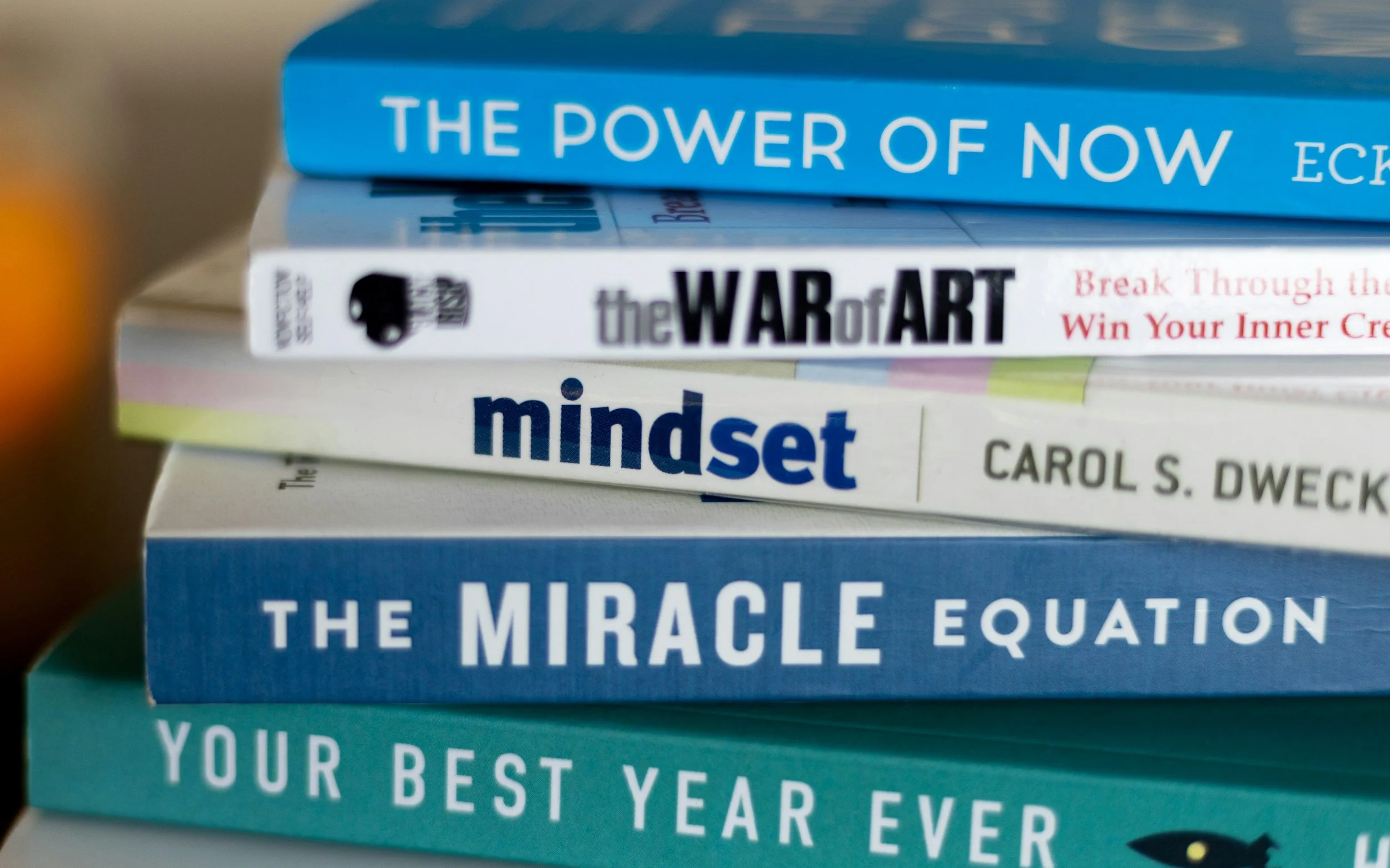
Meet Kristin. She came to me after two years of doing everything right — or at least, everything the self-help world told her was right. She had a morning routine she followed religiously: journaling, affirmations, a gratitude list, meditation. She'd read fourteen books on mindset, healing, and personal growth. She'd taken two online courses on manifesting the life she wanted.
She was also, by her own words, the most miserable she'd ever been.
"I feel more broken than when I started," she told me in our first session. "Everyone else seems to get it. Why can't I?"
If you've ever felt worse after trying to get better, you're not broken. You may have been let down by an industry that profits from your struggle.
Kristin's story is not rare. In my practice, I hear versions of it constantly. People who are doing all the things — journaling, affirming, meditating, manifesting — and still feel stuck, still feel shame, still feel like the problem must be them.
The cycle usually looks something like this: You feel bad, so you buy a book. The book gives you hope. You try the strategies. Nothing changes — or things get worse. You assume you must be doing it wrong. You feel ashamed. You buy another book. Repeat.
If that cycle sounds familiar, I want you to hear this clearly: The problem is not you. The problem may be the self-help content itself. One of most important skills you can develop is the ability to recognize the difference between what genuinely helps and what quietly harms.
What You Actually Want
On the surface, most people frustrated with self-help want the same thing: to know which advice is legitimate and which is garbage. They want permission to stop constantly working on themselves. They want to stop wasting time and money on books that overpromise and underdeliver.
But underneath that? There's something deeper.
You want to trust your own instincts again. Because somewhere along the way, self-help culture taught you to override the quiet voice inside that said, "This doesn't feel right" — and replace it with "Maybe I'm just not committed enough."
You want to stop blaming yourself for struggles that aren't actually about willpower or mindset. You want the freedom to stop performing wellness while your actual mental health quietly deteriorates. And more than anything, you want to know that you're not broken just because a one-size-fits-all solution didn't fit you.
This isn't about rejecting all self-help. Some of it is genuinely valuable. It's about building the discernment to tell the difference — so you can protect yourself from what harms, and recognise what helps.
What Good Self-Help Actually Offers
When self-help works, it's because it does a few specific things well. It normalizes struggle and reduces shame — it says, "You are not alone in this, and here's why it happens." It offers practical, evidence-informed strategies for specific challenges. It provides language for experiences you couldn't previously name. And crucially, it knows its limits: it points you toward professional support when the situation calls for it.
Think of books that teach concrete skills — communication, boundary-setting, emotional regulation. Resources that say, "This approach may help, and if it doesn't, that's important information, not a personal failure." Authors who have clinical training and are transparent about both what their methods can do and what they can't.
That's the bar. Now let's talk about what fails to meet it — and why it can cause real harm.
The Red Flags: What Self-Help Gets Dangerously Wrong
In my work as a registered therapist using an integrative approach, I've watched the same patterns cause harm again and again. Here are the eight red flags I want you to know.
🚩 1: Unqualified Influencers Advising on Real Mental Health Issues
This is the one I feel most strongly about, because the harm I've seen from it is significant and often invisible until it's serious. The self-help and wellness industry is almost entirely unregulated. Anyone can write a book, launch a course, or call themselves a "trauma coach" or "healing guide" with zero clinical training, zero oversight, and zero accountability.
Social media platforms amplify this problem. Social media rewards oversimplification and false certainty. "5 Steps to Heal Your Trauma" goes viral. Nuance does not. And so people with genuine clinical presentations — anxiety disorders, PTSD, depression, complex trauma — end up following advice from someone who healed from a difficult breakup and is now teaching others how to heal from everything.
Watch for: No mention of credentials or clinical training. Claims like "I healed myself, so I can heal you." Advice that contradicts evidence-based practice. A business model built on selling you the next level of transformation.
🚩 2: "You Create Your Reality" (Toxic Manifestation Culture)
The lie is seductive: your thoughts alone determine your outcomes. Think positively enough, vibrate at the right frequency, and good things will come. But this ideology carries a devastating shadow side: if good things don't come, it's because your thinking was wrong. You attracted this. Your vibration was off.
This isn't empowerment. It's victim-blaming dressed up in spiritual language. It erases systemic inequality, ignores the reality of trauma, and tells marginalized people that their oppression is a product of their mindset.
Watch for: "You attracted this into your life," "Everything happens for a reason," "Your thoughts become your reality."
🚩 3: "Just Choose Happiness" (Toxic Positivity)
From a clinical standpoint, suppressing legitimate emotions doesn't make them go away — it drives them underground, where they do far more damage. Grief, anger, fear, and sadness are not signs of a broken mindset. They are functional human responses that serve important purposes.
When self-help tells you that negative emotions are optional, it creates shame for the experience of being human. Clients come to me having spent years trying to "choose joy" while their nervous systems were screaming for attention.
Watch for: "Good vibes only," "Gratitude cures everything," "Just shift your perspective," any framework that treats difficult emotions as problems to eliminate rather than information to listen to.
🚩 4: "Trauma Is a Gift" (Spiritual Bypassing)
There is a meaningful difference between finding meaning in suffering after the fact, and being told that your suffering was necessary, purposeful, or a gift. The latter romanticizes pain, delays real healing, and minimizes the harm that was done to you.
Trauma is damage to the nervous system. It is not destiny, and it is not a prerequisite for growth. Healing is possible, but it doesn't require you to be grateful for being harmed.
Watch for: "Your pain has a purpose," "This happened to teach you something," "You needed this to evolve."
🚩 5: "If It's Not Working, You're Not Trying Hard Enough"
This is the mechanism that keeps people stuck in shame when self-help fails them. When a strategy doesn't work, the content rarely examines whether the strategy itself was flawed. Instead, it turns the failure back on you: you weren't committed enough, you're choosing to stay stuck, success is a decision and you haven't made it yet.
This framing is particularly dangerous for people dealing with mental illness, neurodivergence, or trauma — conditions that don't respond to more effort and better journaling. Some problems need structural support, clinical treatment, or medication. That's not weakness. That's reality.
🚩 6: One-Size-Fits-All Solutions
As an integrative therapist, I work with the whole person — their history, their nervous system, their attachment patterns, their circumstances. What works for one person can be actively harmful for another. A breathing technique that calms one person's anxiety can trigger a trauma response in someone else.
Any resource that presents itself as the only way, the ultimate solution, or the method that works for everyone is either uninformed or selling something. Effective care is personalized. Always.
🚩 7: Anti-Therapy Messaging
"You have everything you need inside you." "Therapy is for people who can't help themselves." "Don't let doctors medicalize your natural emotions." These messages — common in wellness and self-help spaces — keep people away from the clinical support they genuinely need.
Self-help is supplemental. It is not equipped to treat clinical depression, anxiety disorders, PTSD, OCD, eating disorders, bipolar disorder, active suicidal ideation, trauma, or addiction. When self-help content discourages you from seeking professional support, it is putting your safety at risk.
🚩 8: Exploiting Vulnerability for Profit
The self-help industry needs you to feel broken, so you keep buying. This is not a conspiracy theory — it's a business model. "You're not enough yet" is the marketing strategy, and the solution is always the next book, the next course, the next $997 mastermind.
Real healing doesn't require ongoing financial exploitation. Be deeply suspicious of high-pressure sales tactics, escalating upsells, promises of guaranteed transformation, and gurus who create dependency rather than independence.
When Self-Help Isn't Enough: Choosing Therapy
Self-help has a real and legitimate role. It can normalize struggles, build specific skills, provide language for your experience, and support maintenance after clinical treatment. Used well, it's a valuable tool.
But it is not equipped for clinical presentations. If any of the following apply to you, please seek professional support rather than another book:
• Depression, anxiety disorders, PTSD, OCD, eating disorders, bipolar disorder, or personality disorders
• Active suicidal ideation or self-harm
• Unprocessed trauma that's affecting your daily life
• Substance use or addiction
• Relationship abuse or domestic violence
• Anything that is interfering with your ability to work, maintain relationships, or function day to day
And if self-help is making you feel more confused, more ashamed, or more stuck than when you started — that is information. It's not a sign that you're broken. It may be a sign that you need a different kind of support.
You are not too broken for help. You may simply have been getting the wrong kind.
Why Self-Help Culture Is Harder to Navigate Than It Should Be
Here's the painful truth: good self-help and harmful self-help often look identical on the surface. They both use compelling stories, hopeful language, and relatable struggles. They both promise relief. Distinguishing them requires critical thinking precisely when you are most vulnerable and least able to think critically.
The industry is unregulated. Social media amplifies the most oversimplified voices. And capitalism profits from keeping you in a cycle of feeling not-quite-healed-enough to need more.
Learning to vet what you consume — checking credentials, looking for evidence-based practice, noticing whether a resource acknowledges its own limits — is not cynicism. It's self-protection. And it's one of the most caring things you can do for yourself.
Ready for Support That's Actually Grounded?
If you've been stuck in the self-help cycle — hoping the next book will be the one that finally works — and you're ready for something different, we are here to help.
The professionals at Bridge Counseling offer a variety of specialties. They will meet you where you are. No one-size-fits-all solutions. No shame if previous approaches haven't worked. Just skilled, personalized, evidence-informed support.
Book a session today. Let's figure out what you actually need — together.
You deserve care that works. Not content that profits from your struggle.